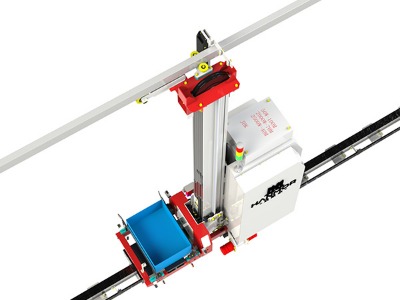
In modern smart warehousing and automated storage and retrieval systems (AS/RS), the rail-guided stacker crane is the beating heart of the operation. Often standing dozens of meters high and weighing several tons, a stacker crane must achieve smooth, high-speed displacements of up to 200 m/min or more between high-density racking. This puts immense physical strain on the traveling mechanism at the base.
Within the industry, the DRS 160 wheel block has become the premier golden standard for medium and light-duty pallet stacker cranes and miniload systems, thanks to its highly modular design, excellent load capacity, and rock-solid stability.
1. What is the DRS 160 Series Wheel Block?
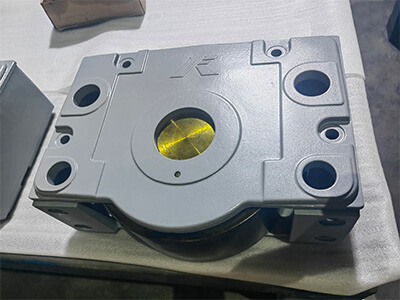
The DRS 160 is an industrial travel wheel standard pioneered and established by Demag. It is not just a simple wheel; it is a ready-to-fit heavy-duty travel unit that integrates the wheel body, a high-strength housing, precision bearings, seals, and diverse mounting interfaces.
DRS 160 Core Specifications:
Standard Wheel Diameter: 160 mm
Maximum Load Capacity per Wheel: Approx. 5--7 tonnes (depending on travel speed and wheel material)
Housing Material: High-grade spheroidal graphite cast iron (e.g., GGG 70) for excellent impact and shock absorption.
Travel Speeds: Perfectly adapted to standard industrial traveling speeds ranging from 60 to 240 m/min.
2. Core Advantages of the DRS 160 in Stacker Cranes
Why do major global logistics system integrators consistently specify the 160 mm diameter when designing stacker cranes?
Compact Footprint and Space Optimization:Installation space on a stacker crane's bottom carriage is often heavily restricted. The DRS 160 features a compact design with four mounting surfaces. Designers can easily tuck it into tight beam spaces, maximizing the effective vertical storage height of the high-bay warehouse.
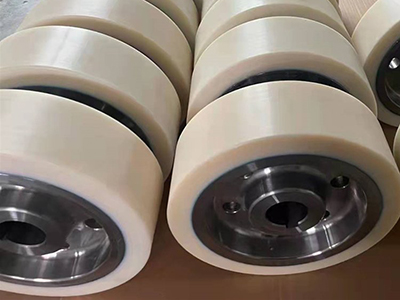
Versatile Wheel Materials:While the outer housing of the DRS 160 is standardized, the internal wheel tread material offers incredible flexibility based on the crane's operating conditions:
Spheroidal Graphite Cast Iron Wheels: Massive load capacity, high wear resistance, and low rolling resistance—typically used for heavy pallet cranes.
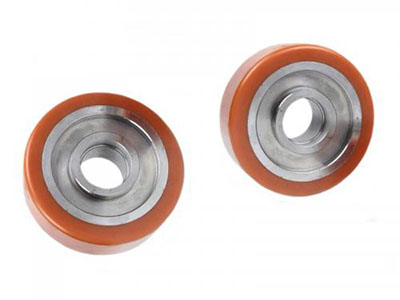
High-Performance Polyurethane Wheels: Exceptional grip, noise dampening, and vibration absorption—making them the perfect partner for high-speed Miniload systems.
Rapid Laser Alignment and Maintenance-Free Operation:Once a stacker crane is placed on its tracks inside a high-bay rack, routine maintenance becomes notoriously difficult. The DRS 160 housing comes with machined reference surfaces for laser alignment. During installation, engineers can quickly calibrate parallelism and perpendicularity, preventing premature track wear and drastically extending the lifespan of both rails and wheels.
3. Typical Workloads and Roles of the DRS 160
Role | Position & Environment | Engineering Recommendation |
Driven Wheel Block | Mounted at one end of the bottom carriage, driven directly by a hollow-shaft geared motor (e.g., SEW, Nord). | Opt for splined or keyed shaft-mounted drive interfaces for rigid torque transfer. |
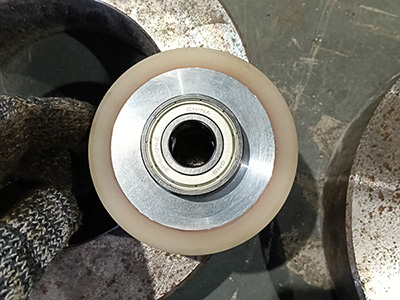
Idler / Guide Wheel Block | Mounted at the opposite end of the chassis or the top guide rail, responsible for load-bearing and vertical tracking. | Equip with precision double-ball bearings to minimize friction and noise. |
Summary
As automated storage systems evolve to be taller, faster, and smoother, the ground-level travel unit remains a foundation that cannot be compromised. With its classic modular design, standardized components, and superb mechanical integrity, the DRS 160 travel wheel block stands as the ultimate dynamic joint for rail-guided stacker cranes. Specifying the correct DRS 160 configuration is a long-term insurance policy for 24/7 continuous, stable warehouse operations.