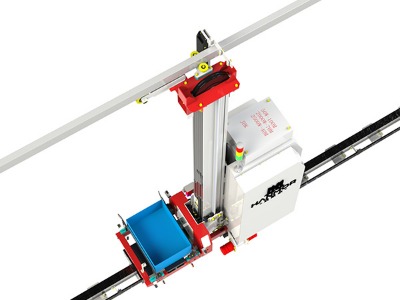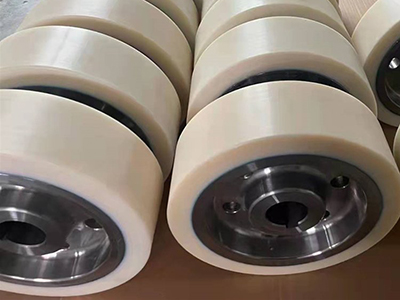
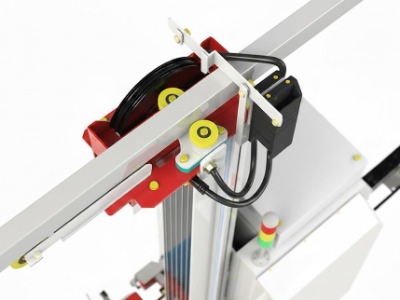
When discussing wheels for automated stacker crane, the selection depends primarily on load capacity, travel speed, and requirements for noise and rail protection. Stacker cranes typically use a combination of Travel Wheels and Guide Wheels.
1. Classification by Material
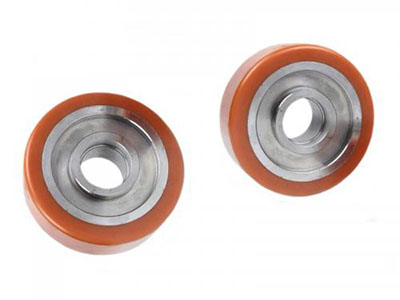
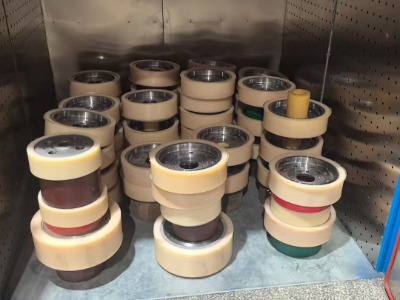
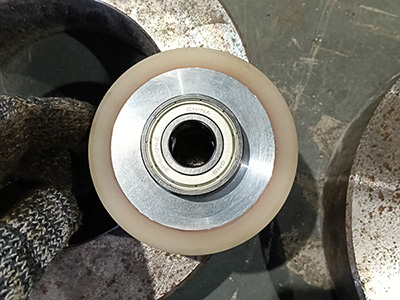
Polyurethane Wheels:
Best For: Light-duty (Miniload) or medium-duty stacker cranes, and environments with strict noise requirements (pharmaceuticals, electronics).
Characteristics: Smooth operation, extremely low noise, and no damage to the ground or rails. Vulkollan is the industry gold standard due to its superior wear resistance and high rebound.
Load Capacity: Suitable for unit loads ranging from 50 kg to approximately 1.500 kg.
Steel Wheels:
Best For: Heavy-duty stacker cranes (Unit Load/Pallet types, usually carrying over 1 ton).
Material: Often made from alloy steels like 42CrMo, 65Mn, or 40Cr.
Characteristics: Extremely high load capacity and long service life. They typically run on steel tracks.
Surface Treatment: The tread is usually induction hardened (hardness generally HRC 45-55) to increase durability.
2. Structural Types and Typical Sizes
Stacker crane wheels are categorized by their mounting position and function:
Wheel Type | Diameter | Primary Function |
Travel Wheel | Φ200. Φ250. Φ315. Φ400. Φ500 | Supports the weight of the crane and handles forward/backward movement. Includes Drive and Idler wheels. |
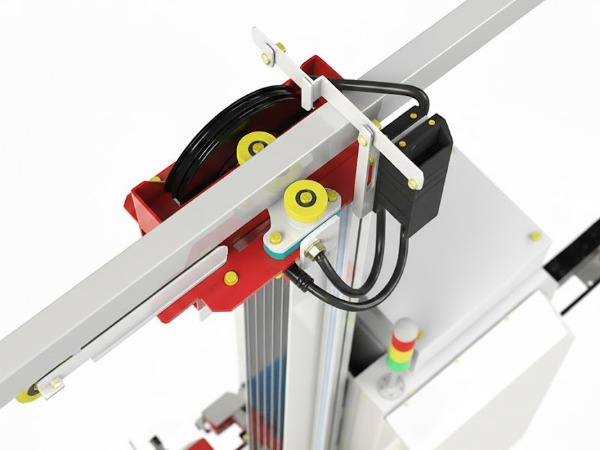
Side Guide Wheel | Φ80. Φ100. Φ125. Φ160 | Mounted on the side of the chassis to grip the ground rail, preventing "crabbing" or swaying. |
Top Guide Wheel | Φ100 - Φ200 (usually coated) | Mounted at the top to grip the sky-rail (top guide rail), maintaining mast verticality and absorbing vibration. |
3. How to Choose the Right Model?
When determining the specific model, consider these three parameters:
Static & Dynamic Load: Calculate the weight of the crane + max cargo weight, divided by the number of wheels. Polyurethane can develop "flat spots" under extreme static loads, so heavy-duty machines require steel wheels or larger diameters.
Linear Velocity: If the travel speed exceeds 180 m/min, high-quality Vulkollan coating is recommended for shock absorption, or precision-machined hardened steel wheels.
Rail Type:
I-beams/Specialized Ground Rails: Often use steel wheels with flanges (single or double flange).
Flat Steel/Rectangular Rails: Often use flangeless polyurethane wheels (using side guide wheels for positioning).
Recommendations
For Miniload (Bins/Totes): High-strength polyurethane wheels with diameters of Φ125–Φ250.
For Unit Load (Pallets): Forged steel wheels (42CrMo) or high-performance large-diameter coated wheels with diameters of Φ315–Φ500.
Are you working with a Miniload (bins) or Unit Load (pallets) system? I can provide more specific load-bearing parameters if you have the weight requirements.
Need a precise load calculation for your stacker crane wheels? Contact our engineering team today.