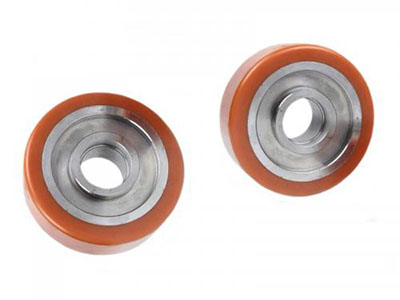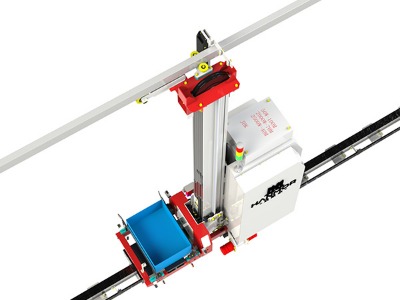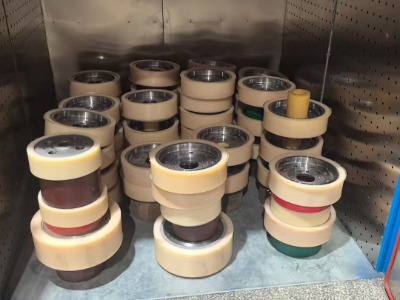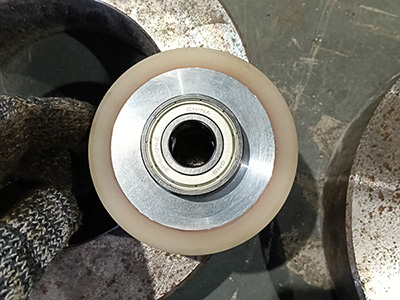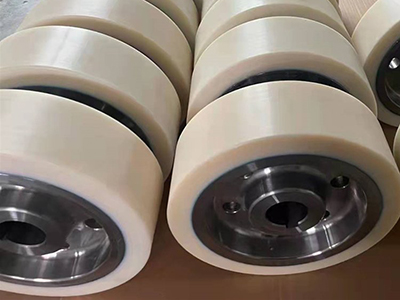
“Engineered with minimal internal friction, our low heat build-up wheels empower AS/RS stacker cranes to achieve high-frequency acceleration without the risk of thermal failure.”
Introduction: In today’s smart warehousing era, where maximum throughput is the ultimate goal, stacker crane speeds have evolved from 120 m/min to 240 m/min and beyond. However, as speeds increase, a critical hardware challenge emerges: the "feet" of the stacker crane—the wheels—are under unprecedented stress.
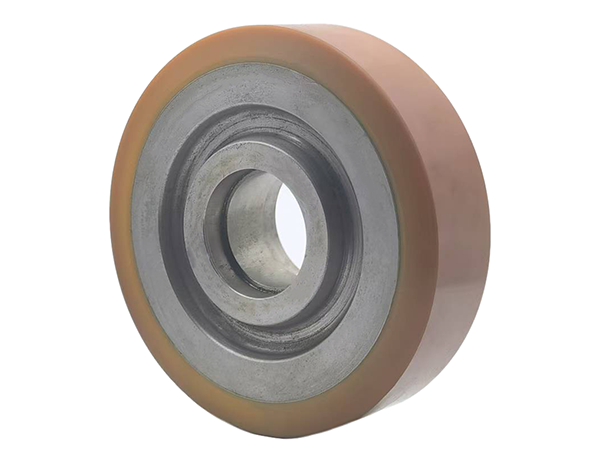
The Invisible Efficiency Killer: Internal Hysteresis
In Automated Storage and Retrieval Systems (AS/RS), stacker cranes perform high-frequency acceleration, deceleration, and reciprocating movements. Many warehouse managers find that when attempting to increase cycle speeds, wheels often fail prematurely, exhibiting physical deformation or severe debonding (bonding failure).
The culprit is Hysteresis. As an elastomer, polyurethane converts a portion of mechanical energy into heat during high-speed cyclic compression. If this heat cannot dissipate quickly, the internal temperature of the wheel rises sharply. Once the temperature exceeds the material's critical threshold, the physical properties of the polyurethane plummet, leading to softening, accelerated wear, and eventually, costly unplanned downtime.
Technical Breakthrough: Engineering "Low Heat Build-up" at the Molecular Level
To solve this industry pain point, the next generation of Low Heat Build-up Polyurethane Wheels has been developed. The core advantage lies in the deep optimization of the material formula:
1. Ultra-Low Rolling Resistance: By optimizing the cross-linking density of the polyurethane molecular chains, internal friction is minimized, ensuring that heat generation remains at a baseline even during high-speed operation.
2. Superior Thermal Stability: Even under long-duration, high-load conditions, the temperature difference between the wheel surface and its core is kept within a safe range, achieving "Minimal heat build-up."
3. High Dynamic Load Capacity: This new material doesn't just run fast; it carries heavy loads. It maintains structural integrity under the intense shear forces caused by frequent starts and stops.
The Results: Faster Speeds, Longer Service Life
By implementing low heat build-up technology, the performance of an automated warehouse sees a measurable boost:
1. Supports High-Frequency Acceleration: Stacker cranes can safely operate at higher acceleration parameters, shortening single cycle times and directly increasing total throughput.
2. Service Life Extended by 30%+: Experimental data shows that under identical high-frequency conditions, low heat build-up wheels last 30% to 50% longer than conventional products, significantly reducing spare part costs.
3. Reduced Maintenance Frequency: Minimizing wheel failure means fewer unplanned shutdowns, ensuring the stability of 24/7 continuous operations.
Conclusion
In an AS/RS system, a seemingly small component like the drive wheel often determines the efficiency ceiling of the entire automated line. Choosing polyurethane wheels with "Low Heat Build-up" characteristics is more than just a part replacement—it’s an investment in the "heart" of your logistics system, ensuring extreme acceleration without the worry of failure.