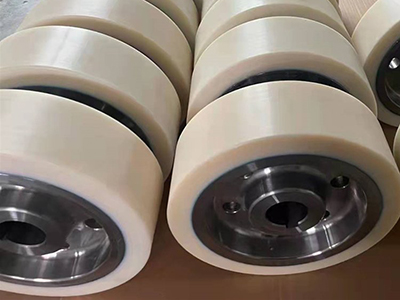
“By implementing specialized siped polyurethane drive wheels for -30℃ deep-freeze environments, this Mississauga-based 3PL provider slashed forklift braking distances by 50% and extended wheel lifespan from 6 to over 18 months.”
1. Project Background
Client: A Tier-1 cold storage and third-party logistics (3PL) provider based in Mississauga, Ontario, Canada.
Application: High-intensity 24/7 operation of Crown and Raymond Electric Reach Trucks in deep-freeze environments (-25℃ to -30℃).
Core Challenge: In Canadian winters, the transition between freezing storage and ambient loading docks creates massive condensation on floors. The standard smooth polyurethane drive wheels lost traction on the icy, "sweating" epoxy floors, leading to:
"Hydroplaning" Effect: Forklifts skidding during emergency braking.
Tire Chunking: Brittle failure of the wheel tread due to extreme thermal shock and high-torque demands on cold surfaces.
Battery Drain: Spinning wheels caused energy loss, reducing shift life by 15%.
2. Technical Challenges
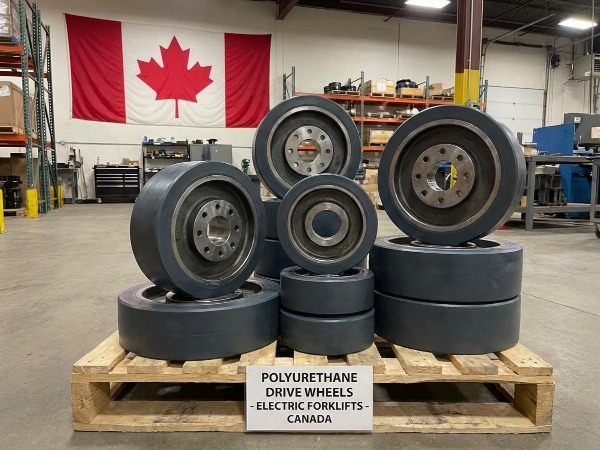
Sub-Zero Flexibility: The material must remain elastic at -30℃ to maintain grip; typical PU becomes too hard and "glassy" in the cold.
Moisture Resistance: Polyurethane bonding often fails in high-humidity/condensation environments (Hydrolysis).
High Static Load: In Canadian warehouses, forklifts often carry heavy pallets of frozen meats and produce, requiring wheels that won't develop permanent "flat spots" during overnight parking.
3. The Solution: Specialized "SPS" (Soft-Poly-Siped) Drive Wheels
Working with a specialized Canadian industrial wheel manufacturer, the facility implemented a dual-layered polyurethane solution:
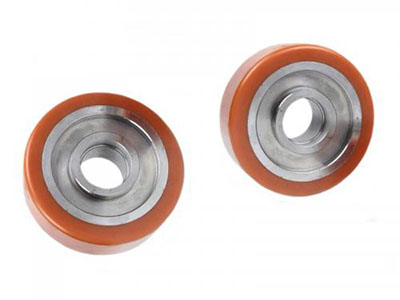
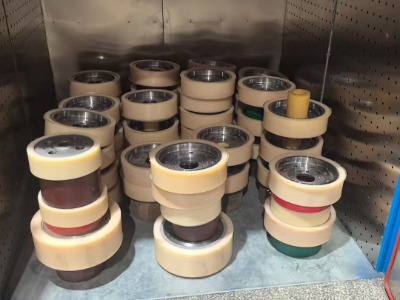
Step 1: Soft-Grip Compound (Shore A 85-90): Instead of the standard 95A hardness, a slightly softer, specialized polyether-based polyurethane was used. This material offers superior low-temperature flexibility and hydrolysis resistance.
Step 2: Diamond Siping & Grooving: The wheel surface was machined with a custom Siped Tread Pattern. Similar to Canadian winter car tires, these micro-grooves break the water film (condensation) to provide direct contact with the floor.
Step 3: Reinforced Fiber/Wire Mesh Integration: For extreme traction, sandpaper-grit or wire-mesh inclusions were embedded into the polyurethane matrix to bite into micro-frost on the floor.
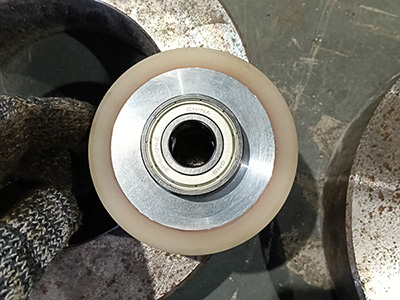
Step 4: Precision Fitment: The wheel hubs were manufactured from heavy-duty cast iron to provide the thermal mass needed to stabilize the temperature of the bonding agent.
4. Results Comparison
Performance Indicator | Standard OEM Wheel | High-Traction PU Drive Wheel |
Braking Distance (Icy Floor) | 3.5m (Significant skidding) | 1.8m (Controlled stop) |
Startup Traction | 4-5 seconds of wheel spin | Instantaneous torque transfer |
Operational Lifespan | 5-6 months (Cracking/Chunking) | 18+ months (Even wear) |
Safety Incidents | Frequent "near-miss" slips | Zero slip-related incidents reported |
5. Conclusion
For the Canadian logistics sector, the "one-size-fits-all" approach to forklift wheels is insufficient. By localizing the solution to include low-temperature flexible polyurethanes and tread siping, the Mississauga facility transformed its fleet into a winter-ready operation. This upgrade not only ensured compliance with OHSA (Ontario Health and Safety Act) standards but also delivered a massive ROI through reduced downtime. Contact us!