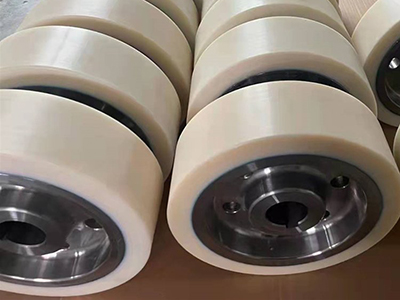
“DRS 315 Wheel Block System for Saudi Arabia’s extreme heat and abrasive desert dust increases MTBF by 2.5x and supports loads over 30 tons.”
As Saudi Arabia’s Vision 2030 continues to drive the strategic expansion of the kingdom’s domestic manufacturing, heavy industrial clusters in the Eastern Province are witnessing unprecedented growth. In this context, a massive steel smelting and fabrication plant in the Jubail Industrial City faced immense pressure on its material handling infrastructure.
The facility primarily produces large industrial steel billets and heavy-duty piping. To handle these multi-ton materials, the plant deployed several high-capacity Demag heavy-duty cranes. Due to operational volumes far exceeding original design expectations, the original wheel assemblies suffered from metal fatigue and severe tread spalling—caused by the combined effects of extreme heat, heavy loads, and abrasive desert dust. This led to frequent interruptions in critical production stages.
Core Challenges
Extreme Heavy Loads and Impact Stress Since the steel billets are massive and moved at high frequency, the wheel sets are subjected to constant, immense vertical pressure. During frequent start-stop cycles, the inertial impact requires wheel blocks with extreme fatigue resistance and structural integrity.
The "Heatwave and Metallic Dust" Composite Erosion Ambient temperatures in Saudi Arabia often exceed 50°C in summer, while temperatures inside the smelting workshop are even higher due to radiant heat from molten steel. This is compounded by abrasive metallic scale dust and fine desert sand, which quickly degrade lubricants and cause premature failure in large-diameter bearings.
The Massive Cost of Heavy Equipment Downtime As the "heart" of the facility’s logistics, any downtime of these high-tonnage cranes causes a domino effect of production halts across downstream processing, resulting in losses of tens of thousands of dollars per hour.
Strict Precision Requirements Heavy-duty equipment demands perfect alignment between the travel rails and the wheel sets. Any replacement system had to ensure a seamless match with the existing Demag structure to prevent "crab walking" or excessive flange wear.
The Solution: DRS 315 Wheel Block System
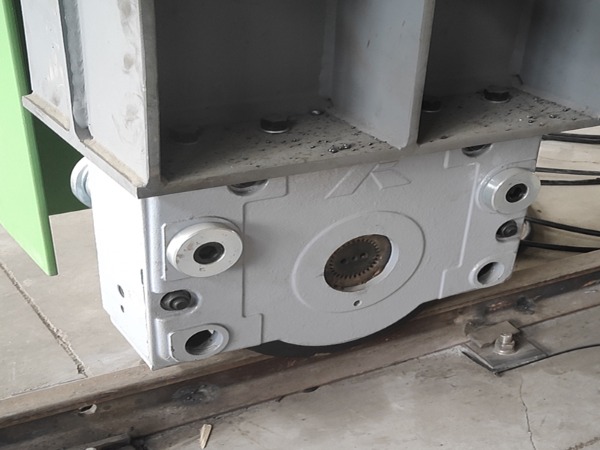
To meet the demands of heavy-lifting operations (30 tons and above), the technical team decided to implement the DRS 315 Wheel Block System—the heavy-duty powerhouse of the DRS family.
Ultimate Load-Bearing Capacity The DRS 315 is engineered for the heaviest applications. Its high-grade spheroidal graphite cast iron housing offers superior damping properties and structural strength, effectively absorbing impact energy during heavy lifts. Combined with high-strength alloy steel wheels, its single-wheel load capacity is more than sufficient for the plant’s most demanding tasks.
Specialized High-Temperature Sealing To combat the Saudi climate, the DRS 315 features specialized high-temperature Fluororubber (FKM) seals and high-performance synthetic lubricants. This multi-layer sealing system not only blocks fine desert sand but also maintains its lubricating properties under extreme heat, ensuring long-term bearing reliability.
Precision Alignment and Rapid Installation As a premium component designed for Demag standards, the DRS 315 dimensions align perfectly with original equipment. Its patented top and side mounting options allowed for precise alignment and rapid installation, ensuring the crane’s travel path remains smooth and stable even under maximum load.
Extended Maintenance Cycles and Superior ROI After upgrading to the DRS 315. the Mean Time Between Failures (MTBF) for the crane’s travel system increased by 2.5 times. The exceptional wear resistance significantly reduced the frequency of spare parts procurement, saving the company massive operational expenditures (OPEX).
Conclusion
The successful implementation of the DRS 315 Wheel Block System in this Saudi steel plant proves its status as an indispensable "core component" for heavy-duty material handling. It not only solved the durability challenges of an extreme environment but also provided a robust hardware foundation for Saudi Arabia’s heavy industry as it moves toward higher capacity and automation. Is your heavy-lifting equipment ready to withstand the heat of the Saudi desert?[Contact Us]