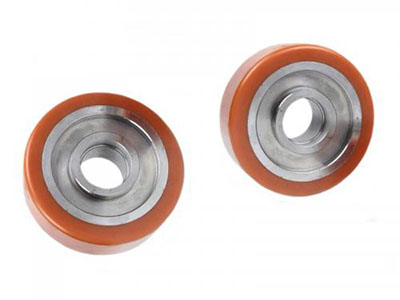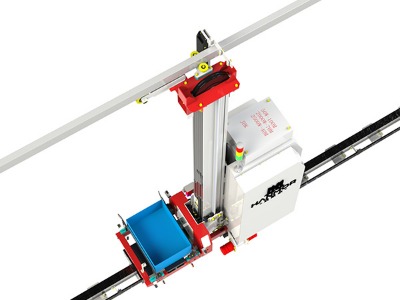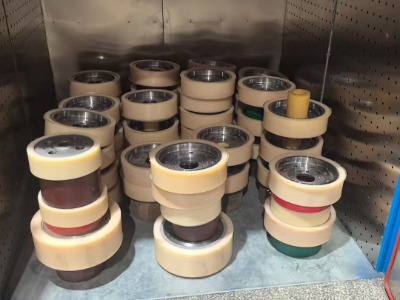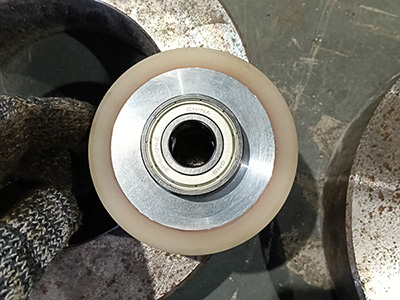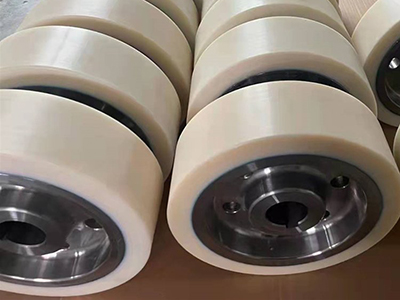
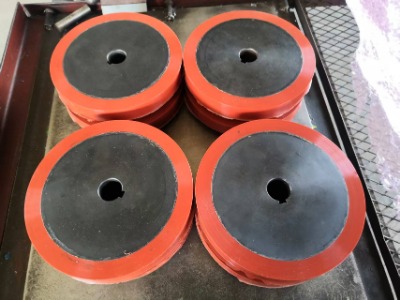
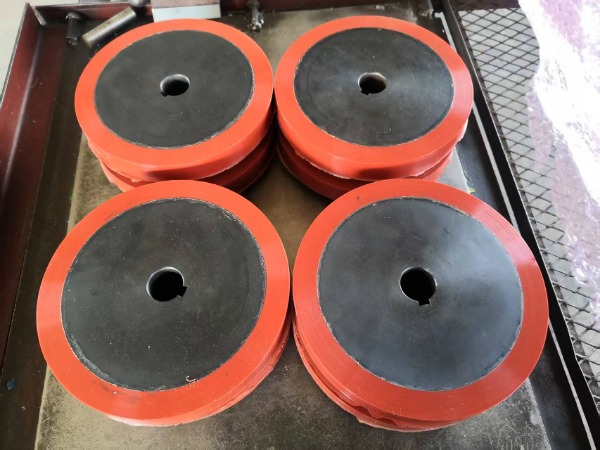
In automotive assembly, appliance coating, and high-end glass industries, the purity of the production line directly dictates the final product's pass rate. Many factories face a persistent headache: Paint Cratering. Even after thorough cleaning of the workpieces, these defects remain. Research shows the culprit is often an overlooked component of the conveyor system: Polyurethane wheels. If these wheels contain even trace amounts of Silicone, the molecules can transfer to the workpiece surface through contact or evaporation, leading to disastrous "fish-eye" phenomena.
1. What is Silicone Contamination? (LABS-Free Standard)
In German and European industrial systems, this is known as the LABS-Free standard (Lackbenetzungsstörende Substanzen), which refers to substances that impair paint wetting. While silicone offers excellent lubrication, it is fatal in coating environments. Due to its extremely low surface tension, it prevents paint from spreading evenly across the surface.
Three Primary Sources of Silicone Contamination:
Raw Materials: Some low-quality polyurethane formulations add silicone oil as a plasticizer.
Release Agents: Traditional casting processes use silicone-based release agents to easily remove wheels from molds.
Cross-Contamination: Production in non-isolated environments allows residual silicone dust in the air to adhere to the wheel surface.
2. How We Eliminate Silicone Contamination: Our 3-Step Isolated Production System
To ensure every wheel delivered meets the strictest coating standards, we implement a full-process isolated production system:
A. Specialty Non-Silicone Formulations
Our high-performance polyurethane prepolymers undergo chemical analysis to ensure the molecular chains contain zero organic silicone. This guarantees that no harmful substances will leach out, even under long-term high-pressure rolling.
B. Dry Mold Release & Dedicated Tooling
We utilize precision-polished dedicated molds and employ dry mold release or eco-friendly silicone-free agents. While this increases production costs and maintenance frequency, it fundamentally eliminates surface residue.
C. Lab-Grade Cleaning & Packaging
Before leaving the factory, every silicone-free wheel undergoes specialized solvent cleaning and is sealed in airtight packaging to prevent secondary contamination from the external environment during transit and storage.
3. Technical Specifications: More Than Just Clean
While ensuring Zero Silicone, we never compromise on the core physical performance of our polyurethane wheels.
Technical Metric | Standard Industrial Wheel | Silicone-Free (LABS-Free) Wheel |
Paint Compatibility | High Risk (Prone to cratering) | 100% Pass (Zero Defects) |
Wear Resistance | DIN 53516 Standard | Premium Grade |
Tear Strength | Standard | Enhanced |
Recommended Hardness | 80A - 95A | Customizable |
4. High-Precision Industries Benefiting from Our Silicone-Free Technology
Automotive Paint Shops: Used for body skids and sliders to ensure zero fish-eyes during e-coat and topcoat processes.
Flat Glass Conveying: Prevents silicone residue on glass surfaces, ensuring flawless subsequent vacuum coating or tempering.
Semiconductors & Optics: For use in cleanrooms extremely sensitive to impurities.
Lithium Battery Production: Avoids potential interference of silicone elements with internal battery chemical stability.
Conclusion
In the world of precision manufacturing, the cost of cheap is often expensive rework. Choosing Silicone-Free Polyurethane Wheels is the most scientific investment to resolve paint quality issues once and for all. Want to verify if your wheels are silicone-free? Contact us to unlock a quote for Silicone-Free Polyurethane Wheels